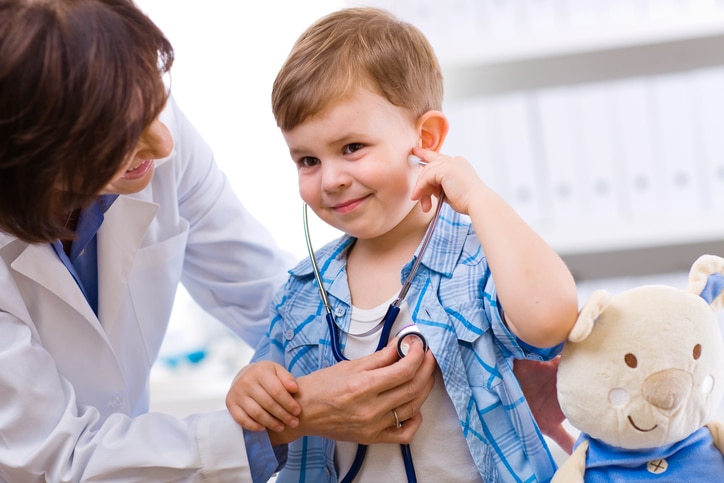
Well Child Exams for Preschoolers – What to Expect

During the first couple of years of a child’s life, they see a doctor more times than you can probably keep count of. While less frequent, preschool age well-child exams can be just as vital to a child’s overall health.

Once children get to age 3-5, provided they are overall healthy and up to date with vaccinations, they may not have an overt need to see the doctor for these years. Nevertheless, this period is not a time to get complacent and skip doctor check-ups.

Well Child Exams for Preschoolers - What to Expect

There are many important physical and mental milestones children reach during this time, and it can help you make sure things are going well, and find out if there are any things that you need to change. There are three parts of a well-child check-up to look forward to: the general health check, new tests that start at this age, and vaccination check in.

Overall Health Check

The health check allows the pediatrician to ensure that your son or daughter is at developmentally appropriate levels. As with any physical exam, a nurse will take the child’s weight, height, and blood pressure. The pediatrician will do a more thorough analysis of breathing, their heart beat, reflexes, and other physical ability. When you go to the same doctor for years in a row, the file will grow too. This allows for the pediatrician to be able to see, for instance, if a kid has had a growth spurt that has sent him over the average of his age group, or if his weight has rapidly increased and a diet adjustment is needed.

A well-child exam is also the perfect opportunity to ask the pediatrician any questions you may have. No question is too silly, and your pediatrician can give you valuable answers that reduce your worry.

New Tests

For most children, this age will be the first time when they receive screenings for hearing and vision. These are very important, as children are about to start trying to read and going to school. Minor deficiencies in hearing and eyesight may not have been noticeable but can arise when children show struggles in reading or listening to directions.

Vaccinations

The number of vaccines generally administered during this age are minimal, but be aware that many states and school districts have vaccination expectations before the student enters kindergarten. Some of the vaccinations that your child may be checked for during this age include MMR (for mumps, measles, and rubella), Hep B and A, DTaP (diphtheria, tetanus, and pertussis), and IPV (for polio). The child’s pediatrician will let you know if and when your child needs their next vaccines, and set up those appointments as needed.

Taking your son or daughter to his or her pediatrician consistently for a well-child exam is a necessary and relatively easy step to ensuring a healthy development through their early years. Doctors will be able to give you valuable insight and a fuller picture of growth when they have years of data and knowledge about your child. A pediatrician you trust is the best defense against the potential illness that arises.

What are Pediatricians?

Even if you’re not a doctor, it’s clear that children and adults are very different. The early stages of life undergo rapid change (as any new parent will tell you how giant their two-month-old is). With children growing like weeds, how do you know that everything is going well? Luckily for the typically paranoid parent, the right pediatric group can offer fantastic guidance.

Young Children Need to Go to the Doctor

Routine checkups at pediatric groups ensure development proceeds well in children. As an infant, frequent checkups are even more important. The first three years of life place a heavy emphasis on brain development, and any responsible parent will want to make sure everything is on the correct track.

Most adults don’t go in for checkups, and if they’re healthy, they’ll be able to get away with this. Children and infants, however, cannot skip any visits because the negative effects of an ailment can be long-lasting.

What are Pediatricians?

Primary Responsibilities of a Pediatrician

Responsibilities of a pediatrician include vaccinations, updates on the growth trajectory of your child, and providing information to you on the health and nutrition demands of your child. A good pediatric group should have great communication skills and be patient. Whether good or bad news, pediatric groups need to inform parents on the health status of their children.  In an average day, a pediatrician might deal with a patient coming in for a chicken pox vaccine to discovering a new allergen for a toddler.

The issue for pediatricians is that many of their patients haven’t developed verbal communication skills. Auditory and visual cues are a pediatrician’s best friend. Through tests and observation, pediatricians can be successful in diagnosing infants and children.

An example of a difficult diagnosis would be Gastroesophageal Reflux (GER) in infants. One of the symptoms of GER is vomit, which most babies do already, so it isn’t easy to recognize. Left undiagnosed, GER can cause major esophagus issues leading to malnutrition. But the tough diagnoses for their younger patients don’t end there.

Do pediatricians only treat young children?

Most pediatricians will tend to their patients until the age of 18, but some even continue until age 21. Mental illness is prevalent among teenagers, and going undiagnosed can be harmful to the health of your child. Discovering these ailments early on will allow treatment to prevent further long-term damage.

This is the main reason why pediatric groups stress the need for parents to bring their children in for their scheduled well-child exams. Even if there is nothing overtly wrong with the child at the time of the scheduled exam, red flags of possible conditions can be caught. Then proper tests can be administered or the possible condition can be monitored.

 Why is there a need for pediatricians?

Children are different from adults, and that’s why pediatricians are necessary. There are certain conditions that come up in children much more often than adults, so you want to see a doctor who specializes in making sure babies and children have the medical care they need.

The Benefits of Using a Board-Certified Pediatrician

The American Board of Pediatrics is an organization that provides a common standard for pediatric services in the United States. They oversee a rigorous process to provide approval and certification to pediatricians, although their certification is not required by law. As a result, they have become a nongovernmental standard for pediatric services that can be considered to be stricter than government regulation.

The board of pediatrics judges a pediatrician by their expertise as well as common knowledge. In addition, they provide a vital network for pediatricians to work together, as well as a verification process for parents who are getting a new pediatrician. The following are some specific benefits of using a board-certified pediatrician.

The Benefits of Using a Board-Certified Pediatrician

A Network of Pediatricians

The most obvious benefit of using a board-certified pediatrician is the fact that certified members are part of a national network of pediatricians. This network not only provides expertise but also references for pediatricians to refer patients if the patient has a problem that does not fall under their specialization. Finally, they are kept in the know in important work and research that could change how they perform their services.

A Common Standard

While the government and universities have their own levels of certification to allow a pediatrician to open a practice, the American Board of Pediatrics goes an extra step to apply further common standards in how a pediatrician should perform. These standards include facility requirements, as well as advanced knowledge that is not required by normal governmental standards. A board-certified pediatrician will be subject to these standards in order to maintain their certification, and requirements are regularly updated.

A Think Tank

One of the biggest and most important aspects of the American Board of Pediatrics comes from its significant contribution to research in a wide variety of pediatric fields. This research can touch on anything from changing facility standards to helping improve the quality of life for children and adolescents who suffer from particular diseases. Some research may actually contribute to finding a cure for certain diseases that are currently incurable.

Greater Security for You and Your Child

A pediatrician who has gone through the certification process has put in the extra effort to achieve a level of professionalism in their industry. By extension, that means they are going to be more focused on your child’s healthcare, as they are proven to be more passionate about the pediatric field. This commitment is an added level of personal security for you and your child’s health.

The Importance of the American Board of Pediatrics

Any specialist can become a board-certified pediatrician, provided they pass an exam for certification. Certification exams are specialty-specific as well as containing general knowledge for pediatricians, meaning there is a comprehensive standard for certification. When you are looking for a pediatrician for your child, you should always verify their board certification to ensure that they meet these specific standards for their field.

Teaching Your Child to be Healthy with Routine Pediatric Services

Pediatric services are perfect for when your child needs to go in for routine appointments, such as checkups or vaccinations. However, even with a fantastic pediatrician, the task of taking a child to the doctor is less than ideal. Part of the way you can avoid doctor’s visits is by giving lessons to children on how to be healthy and take care of themselves.

Teaching Your Child to be Healthy with Routine Pediatric Services

Let’s look at a few ways to help teach your children to stay healthy.

Stay on Top of Their Diet

The very first line of defense against an unhealthy lifestyle is watching your child’s diet. Many parents let their children go out and buy their lunch at school; however the problem is that the children are the ones choosing what they eat. There are two ways to help steer your child to eat healthier.

First, you can start at home by teaching your child what is good and what isn’t good to eat. You can even encourage eating healthy by influencing them to like foods that children normally despise, such as vegetables. Sweets should always be provided as an occasional treat rather than a readily available snack.

Meanwhile, you can also help your child by packing a lunch for them. This way, you can directly decide what your child eats when they go off to school. In this case, though, it is always good to let them buy lunch some days and pack lunch on others in order to add choice to their healthy eating habits.

Encourage Physical Activity

You should jump at the moment your child expresses interest in any sport. Sports are an important part of your child’s physical and social development. Additionally, you can help encourage your child by being openly supportive.

When your child first decides on playing sports, you should go wherever you receive pediatric services so they can receive a physical. The physical is supposed to determine whether or not your child is able to play sports.

You might also decide to become involved in your child’s newfound hobby by deciding on coaching or hosting events for your child’s team. This way you can bond with your child while also getting to know their friends and other parents.

Work on Your Own Habits

As a parent you are the first and foremost influence on your children’s lives. Just that alone should serve as encouragement to eat healthy and stay active so you can impart that same lifestyle on your children. When you make healthy choices, your child will be likely to do so as well.

That means you should get involved in some sort of sport as well. Instead of buying junk food, you can go for fruits or vegetables as a snack. Finally, you should always work on other important habits, like brushing your teeth and getting adequate exercise.

If you ever have any doubts on how you might encourage a child to make healthy choices, you can always consult some pediatric services to help give you advice on what is healthy for children.

Why Well-Child Exams Are Essential to the Development of Your Child

Every child is different. As they grow, these differences can affect the way they develop, both physically and mentally. That is why well-child exams are an essential part of your child’s development. Not only will you get regular health checks from the pediatrician, but you will also have the opportunity to address any concerns that you may have.

Why Well-Child Exams Are Essential to the Development of Your Child

In the first few months, you are likely to have many questions and concerns about your baby. The American Academy of Pediatrics recommends scheduling regular well-child exams. These should be done at the following intervals

  • Three to five days old
  • By one month
  • Two months
  • Four months
  • Six months
  • Nine months
  • One year
  • Fifteen months
  • Eighteen months
  • Two years
  •  Thirty months
  • Three years

Regular well-child exams are an important first line of defense in the prevention of childhood illnesses. While this is crucial, the sessions with the pediatrician will also offer an opportunity for you to share your parenting experiences and ask any questions you have about the health and well-being of your child.

Peace of Mind

Looking after a newborn baby is a very stressful time, and you are likely to be very sensitive to even the subtlest of changes in your child’s health or behavior.

No matter how big or small the issue, the pediatrician will be there to address any concerns and worries you may have. Many patients feel that their questions might be silly, but when it comes to your child’s well-being, it is better to be safe than sorry. It is essential that you raise any perceived problems, so the pediatrician can investigate if necessary, or put your mind at ease if not.

Complete Checkup

One way that you can get peace of mind is through a thorough medical exam. You probably have many questions about your child’s well-being, and these will be addressed during the well-child exam. The pediatrician will check your baby’s vital signs and provide you with vital information about your child’s development.

So, whether you are concerned about your child’s sleeping patterns, emotional behavior or eating habits, the pediatrician will be on hand to give you the information you need to help raise your child.

Tips and Suggestions

There is an enormous amount of information on the internet about raising children. Yet, it is important to get the right information for your child. What is normal in one case might not be in another.

As part of the well-child exam, the doctor will give you advice and recommendations about nutrition, safety, and behavior. This will help you make any necessary adjustments to your baby’s daily routine or meals.

Vaccinations

Babies are susceptible to a variety of infectious diseases, which can cause many health complications. That is why the well-child exam can be very helpful, as the pediatrician will discuss all the relevant vaccinations and time frames with you. That will give you one less thing to worry about.

Nobody likes injections, and this can be especially true for a baby or child. Having regular sessions with the pediatrician will help your child to become familiar with them, and make the vaccinations as stress-free as possible for both you and your little one.

With you every step of the way

Whether you have concerns or not, your pediatrician will be there for you from your child’s first steps onwards. This care will help your child stay healthy and active.

3 Things to Remember for a Child’s Doctor Visit

Proper communication with your kid’s doctor is important for keeping up with your child’s health. When you fail to mention some sort of issue or oddity that comes up in your child’s day-to-day activities, then you are potentially putting your child at risk later on. A pediatrician is there to help your child in their development every step of the way.

The following are a few things that you should be mindful of every time you visit the doctor’s office. These can be things you have to observe yourself or things you should ask your child every once in a while.

Family doctor attending toddler

  1. Moles and Other Skin Problems

You should always monitor skin problems that can turn out to be a serious issue. While there are plenty of things that could pop up on a child’s skin, moles are probably the easiest to notice—though not always. Other than that, there are passing ailments that are chronic or permanent that may start out as rashes or scaly skin and turn out being rosacea or eczema.

For moles, your first goal would be to take note of their location on your child’s body. They may appear normally but often come about after a sunburn. While they are most often benign, you should point out any moles that have become irregular, raised, or scaly to your kid’s doctor so they can be properly checked.

  1. Allergies

These are the bane of any parent’s existence and often make the parent into a paranoid sentry that watches out for any problems that a child may have upon ingesting food with unknown ingredients. While food allergies in general are uncommon, you should look out for any warning signs the moment they pop up. While severe reactions require emergency treatment, you should also report to a doctor if your child experiences rashes, numbness, or other sensations after eating.

In addition, seasonal conditions that arise from substances like tree pollen, grass pollen, or ragweed can become an issue later in life. The doctor might even recommend giving your child medication during the most problematic seasons in fall and spring.

  1. Issues with Sleep

It can often be easy to forget issues that come about during the night and wee hours of the morning. It is recommendable to take note of any irregularities in your child’s sleep schedule. These can range anywhere from waking up often at night to night terrors and sleep walking.

If your child is not sleeping properly, it could give rise to a deeper issue later on in life. Issues with sleeping do not always point to mental issues or over stimulation, and they could be a sign of a complicated illness.

We are usually on top of our child’s health, but sometimes, in our day-to-day lives, we may not notice certain issues if they are not glaring problems. These issues should be checked right away. The sooner your kid’s doctor prescribes the necessary treatment for something, the better off they will be later in life.

5 Reasons to Choose a Pediatrician as a Primary Care Physician

From birth, your children will need constant checkups to make sure they are healthy and growing. This will probably lead to you picking your regular, primary care physician as your child’s doctor because they are familiar and know you well. However, a general practitioner and a pediatrician are two different kinds of doctors from two different fields of medicine.

Your pediatrician will be able to tend to your child’s needs because that is part of their medical studies. The following are the four main reasons pediatric services will be the better choice.

1. Personalized Service

A pediatrician is trained in caring for children, which includes working with them personally to create a friendship that will make your child more comfortable at the office. The pediatrician will make an effort to make sure your child is happy, including by providing games and fun magazines in their office. That personalization will not only make your child more comfortable but also more willing to communicate any problems they may have to the pediatrician.

 5 Reasons to Choose a Pediatrician as a Primary Care Physician

2. Specializations

Pediatric services don’t solely cover general medicine. There is actually a pediatric variation of nearly every specialization, such as gastroenterologists, neurologists, and even surgeons. Not to mention there is neonatology for newborns who should care for your child for the first moments of their lives.

3. Extended Age Range

Most people hear the word “pediatrician” and think that means a doctor solely for younger children. In truth, a pediatric physician will work with your child from birth until they reach early adulthood, from eighteen to twenty-four. That means the physician will be tracking your child’s health for the entire part of their early lives.

4. Important Services

As a part of pediatric services, there are several things outside of normal, primary healthcare that the pediatrician is responsible for. For example, if your child needs a physical for extracurricular activities, they will go to the pediatrician to get the physical done to make sure they are healthy enough to play. The same goes for other services such as vaccinations.

5. Counseling

As part of the many specializations that are covered by pediatric services, there is a special place for pediatric counseling. From the beginning of middle school all the way up into high school is an important period of time for children, and it can be confusing and exciting. A pediatric counselor will be able to help the child as they are growing by providing personalized care that is known among pediatricians.

A pediatrician is focused on keeping your child healthy, and they accomplish this goal in a variety of ways. They will communicate with you, but more importantly, they will be able to communicate with your child to determine whether they have any illnesses or issues.

Pediatric services will follow your child from their first steps up until adulthood. It is important to decide on a pediatrician as your child’s primary care physician so they receive the care they need to stay active and healthy.

3 Primary Reasons a Child Should Go to the Clinic

A clinic is generally the term we use to refer to a general practitioner’s office. However, a clinic is an overarching term used for a place that provides outpatient services such as checkups or when asking about a condition that might need further study from a specialist. Since children tend to fall ill more often than adults, you should expect to make plenty of visits to a children’s clinic.

The following are some reasons to go to the clinic with your child, as well as other services they normally provide.

1.Vaccinations

This is probably the most important service provided by a clinic. Many times, it can be hard to find a doctor who can provide vaccinations to your children, whether they are flu shots or the regular regimen of vaccines. A clinic is a great place to get vaccines because they are normally calm places with personalized services.

3 Reasons a Child Should Go to the Pediatrician Clinic In Littleton

The nurse or doctor providing the shots will be able to stay with your child every step of the way. After it is done, they will be able to schedule the next appointment and help you with any questions you may have.

2.Cough and Frequent Sneezing

A cough or cold are normal parts of growing up. They are usually signs of a child’s immune system fighting off a minor illness so they won’t end up getting too ill. However, there are times when you should take your child to the children’s clinic for a cough.

A sure-fire sign that merits more investigation comes from coughs or sneezes that produce colored phlegm. Normally, phlegm will be mostly clear, but when it comes out cloudy, it might mean that there is a deeper respiratory problem that should be investigated further. Additionally, any specks of red should be immediate cause for concern and, depending on the amount, might even merit a visit to the hospital.

3.Child Complaints

Apart from the obvious signs, we are not always completely aware of our children’s health. When something goes wrong, they are usually the first ones to tell us. However, we sometimes end up brushing off their complaints as part of growing up.

The truth is, children are more aware of their bodies than we think. When something is wrong, they will tell us, but they are not old enough to articulate the problem in a way that we will perceive of as a cause for concern. If your child complains about something out of the norm, such as a particularly constant stomachache, it may be time to take your child in to learn more.

A children’s clinic functions just like an adult clinic but with the added benefit of having doctors who focus particularly on the field of children’s medicine. They have studied illnesses as they pertain to children in order to provide better care to young kids. Their expertise allows them to prescribe the right treatment that will be safe for the child and easy for the parent for administer.

Medical Conditions Pediatricians Can Treat

Childhood is a time full of wonder and exploration, but it can also involve some unpleasant experiences. Health conditions of various types can begin during childhood, which is why having a trusted pediatrician is so important. Pediatricians are specifically trained to help children through a variety of medical conditions, including the issues listed below.

Medical Conditions Littleton Pediatricians Can Treat

ADHD

Attention deficit hyperactivity disorder, or ADHD, has become almost a humorous stereotype among children. However, in many cases, it’s real challenge that requires special guidance and treatment. If you notice these symptoms, your child may have ADHD:

  • Constant fidgeting
  • Apparent carelessness
  • Easily distracted
  • Inability to focus on some tasks until they’re finished
  • Tendency to lose items
  • Constantly in motion

Pediatricians use a variety of methods to test children for ADHD, including assessing their medical history, performing hearing and vision screenings, and utilizing certain types of brainwave imaging technology. They may also test for other conditions, such as anxiety, depression, thyroid problems, sleep disorders, or undetected seizures, each of which may produce symptoms similar to those of ADHD.

Treatment of ADHD will most likely involve both behavioral therapy and medication. A pediatrician trained in treating behavioral disorders will provide the knowledge necessary to determine the best course of action.

GERD

Gastroesophageal reflux disease, or GERD, is not reserved only for adults. It can occur in children too, leading to discomfort, frequent spitting up or vomiting, and difficulty eating. If your child exhibits the following symptoms, you should see your pediatrician for an examination, especially if their symptoms are severe:

  • Frequent vomiting
  • Refusal to eat
  • Difficulty swallowing
  • Choking or gagging
  • Persistent cough
  • Heartburn
  • Constant gas
  • Belly pain

Sometimes, it might just be a random occurrence that doesn’t warrant medical attention. For instance, infants may spit up frequently because their stomach and esophagus are not fully developed yet. Eventually, they may outgrow it. If not, your pediatrician might recommend certain lifestyle and diet changes as well certain medications.

Asthma

Children face unique challenges when it comes to asthma. While the condition itself doesn’t differ from asthma in adults, childhood physiology does complicate things a little, making asthma attacks a common cause of child emergency room visits in the US. Symptoms of asthma include:

  • Frequent bouts of coughing or wheezing
  • Shortness of breath
  • Chest pain
  • Congestion or a feeling of tightness in the chest
  • Difficulty sleeping
  • Fatigue
  • Difficulty breathing
  • Slow recovery from colds, the flu, or other respiratory infections

Treating a child with asthma usually involves the use of both long-term and quick-relief medications that control inflammation in the airways and lungs. These are usually inhaled, but certain pills also exist. The type of treatment pediatricians will recommend depends on your child, their current exercise or play habits, and whether their asthma is brought on by allergies.

Pediatricians in Your Area

If you’re looking for a pediatrician to help your child with any of these conditions, do your research carefully. Not all pediatricians in the Littleton area are equally skilled, accessible, or personal, so be sure you find someone you can trust. They will be able to help your child through early-life medical conditions and challenges, ensuring they’ll grow up healthy in the future.