Keeping Your Little Ones Safe: Winter Safety Tips

The winter can be a really fun time for the family, with many great activities to enjoy. However, this time of the year presents some unique challenges for parents. Generally, kids love playing in the snow, but it is vital that they do so in a safe way. No matter the age of your children there are some things you should always do.

In this latest post, we look at some winter safety tips which will keep your kiddies safe while still enjoying this fun time of the year.

Keep Them Warm and Dry

Layers are essential regardless of the child’s age. Aim for several thin layers which can easily be removed if they get wet. Some form of waterproof footwear will help keep your child’s feet dry and warm, which minimizes the risk of frostbite.

Remember to use winter accessories no matter whether you are playing outside or traveling to somewhere else. Hats are essential to maintaining body heat, while mittens and scarfs help to keep the cold at bay.

Don’t Forget The Sunscreen

This one is really important especially if it has been snowing. While the UVA rays may be weaker during the winter months, it is still possible to suffer from sunburn. It doesn’t matter whether it is cloudy or a blue sky, make sure that you apply sunscreen on any exposed areas of skin before they go out to play.
Keeping Your Little Ones Safe: Winter Safety Tips

Brush Up on Personal Hygiene

Bugs and viruses such as the common cold tend to be more prevalent in the colder months, so it is crucial that you and your kids maintain proper personal hygiene practices.

Make sure they are regularly washing their hands especially if they have the snuffles. They should also cover their mouth with the bend of their elbow if they sneeze. Also, during the flu season ensure that your little one’s shots are up to date as this will help with their immune system defenses.

Enjoy the Snow Safely

The winter should be a fun time for all the family, but it also presents different risks such as trips and falls on slippery surfaces. Crossing the road or walking to the car can be more dangerous than usual, so you should encourage your children to pay more attention and walk slowly.

Your kids might want to spend all day out in the snow, but you should minimize their exposure to the cold specifically when there are snowstorms or the temperature drops below -16˚.

Supervise your children while they are outside and regularly check to see if they are warm and dry. Remove any clothing that becomes wet as this will affect their body temperature.

Winter Activities

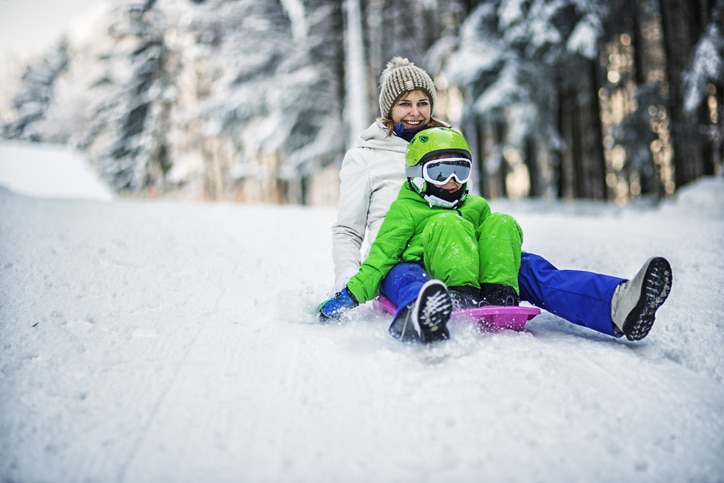
Winter is a great time to enjoy sledding, skiing, and skating.  Your children should be supervised at all times and wear the appropriate safety equipment such as helmets and gloves.

Sledding should be done in a safe place far away from roads and crowded areas while skating should be done in designated places under supervision.

If you remember these common-sense rules, then everyone should come through the winter unscathed.


8 Hot Tips While Traveling with Kids

Traveling with children, especially over long distances, can be hard. They get bored; they start to get riled up, and suddenly your journey is a nightmare. But this really doesn’t have to be the case. It is entirely possible, and easy, to have a pleasant journey with your children. Want to know more? Well, here are our top eight tips while traveling with kids.

Allow plenty of time for your travels

Whether you are traveling in the car or taking public transportation, you should allow plenty of time to get to your destination or the place you will travel from. Children do not understand the time pressures of travel and will naturally want to explore, examine, and stop to look at everything. By allowing plenty of time for this, you negate the possibilities of being late to arrive.

Consider using public transportation

Taking a train, bus or boat can be a novelty for any child that usually travels by car. All the new sights and experiences will entertain them and keep them busy. Public transportation also allows you to interact with your child more during a journey that, otherwise taken in the car, maybe mostly silent.

8 Hot Tips While Traveling with Kids

Mark your child

This may sound like a crazy suggestion, but when taking your child into the busy confines of an airport, train or bus station there is always a slight chance you may lose them. By writing your mobile number on your child’s hand you increase the chances of finding your child again quickly.

Explain the journey to your child

If your child is new to the form of transportation you are taking, consider talking them through how they will travel and what they will need to do. This talking can greatly alleviate any fears they may have when it comes to the actual travel.

Have plenty of activities for your child at hand

Children, especially younger ones, soon lose interest in anything they are doing and need to be entertained with something else. This is especially true when traveling, and they cannot move from a seat and play. Try packing a variety of distractions such as toys, puzzles, books, coloring books, magazines, and games.

Give your child a camera

Disposable cameras are ideal for this task, although you can also buy ones that have been specifically designed for the clumsy younger hands. Encourage your child to take photos of everything around them, keeping their focus and interest fulfilled.

Encourage your child to keep a travel journal

For older children, this is an ideal activity that will keep them drawing and listing things that they have seen or places they have been to. You can also purchase postcards on your travels which the child can write to themselves and stick in their journal. These cards go on to make a great memory source as your child gets older.

Just in case, have medicines at hand

There are probably a few things worse than traveling with a child that is ill and not being able to do anything other than offer comfort. Therefore, it makes sense to pack some medicines to take with you when you travel.

Warning : Be Wary of Using Symptom Checkers for Your Kids

As a parent, you will always have the deep, instinctual urge to worry about the health and wellbeing of your child. The moment something goes amiss, you immediately look for the root cause. Oftentimes, you will have to turn to the internet for an answer, especially when you don’t have access to a pediatric care professional right away.

Doing a little research on the internet is fine, especially when you are looking for a way to relieve the effects of some lesser symptoms. However, when we are curious, we might end up looking at a “symptom checker” to check off a series of symptoms and get a long list of potential illnesses. To be frank, these checkers are unreliable, especially the more complex ones.

Mother checking kids temperature

The Problem with Symptom Checkers

As previously stated, we worry a lot as parents, and it’s only natural. However, this worry can sometimes cause us to become irrational, and we can even end up thinking a cold is really a more severe illness that, in reality, would make no sense.

The fact of the matter is that symptom checkers tend to point to illnesses that are uncommon or downright rare.As an example, there are many cases where a symptom checker will point out cancer as the root cause of certain symptoms. As we all know, cancer is very rare in children, and the symptoms that you chose might just be generalized. The symptom checker only tries to suggest certain illnesses based on a database of symptoms; it is in no way an accurate diagnosis.

In any case, there are some times when a symptom checker is okay, especially when you are diagnosing adults. Children are another case altogether because the majority of symptoms you can be absolutely sure about are those that are visible. Otherwise, you have to rely on the reports of your child in order to determine what the symptoms are.

Which Symptom Checkers are Reliable?

Despite the poor reputation of symptom checkers, there are some good ones that are okay when looking for pediatric care. These particular checkers offer more generalized information rather than specific causes for illnesses. They highlight the fact that these problems are suggestions rather than an actual diagnosis.

Additionally, the good kinds of symptom checkers will offer solutions or remedies for symptoms as well as connections to other symptoms you might not be aware of. Finally, as a particular case for children, these symptom checkers will offer results that are specific to childcare and illnesses that are especially common among children, such as pinkeye.

Even though there are good symptom checkers, the ultimate diagnosis should always come from a doctor or specialist. When it comes to pediatric care, the professionals are always the ones who are there to help look after your child. If you end up looking at a symptom checker, always keep in mind that you should take your sick child to the pediatrician—no matter what the checker says.

Announcement: Jeannine Randolph’s last day with Focus on Kids Pediatrics

We are sad to inform our patients that Jeannine Randolph’s last day at Focus on Kids Pediatrics will be November 11, 2016. Jeannine has been a wonderful and caring provider for many of our families since 2005. We wish her the best of luck as she begins a new and exciting journey in her career.

Please feel free to come into the office to see Jeannine before her last day on November 11, 2016.  Additionally, if you have any questions regarding transitioning care for your child, please feel free to call our office and speak with our office manager, Jolene.

Time to Review Your Health Insurance Benefits

Review your Health Insurance Benefits and NetworkAs the first of the year approaches, we would like to take the time to remind you that now is the time to review your insurance benefits and check to make sure that we are still in-network with your insurance.

It has come to our attention that some insurance companies, both large and small, are starting to come out with some smaller network groups that we are not a part of.  It is no longer a matter of being in-network with PPO plans or HMO plans.  As we are noticing more “sub-network groups” being put into effect, you must know exactly which network you may utilize with your insurance plan.

We ask that you please not call the office and ask if we participate in a particular network as we will be unable to give you accurate information. There are many networks out there that we are not yet familiar with. We would also ask that if you are using an insurance broker that you make sure you review the benefits of the plans being offered to you closely.

Please make sure that you understand what is covered by the plan you choose, as any services not fully covered or not covered at all become the financial responsibility of the parent and/or patient.

Serious Allergies in Kids on the Rise

food allergies in kidsThe Fall issue of Rocky Mountain Kids, published by Swedish Medical Center, recently quoted our own Michael Frand, MD.

The article referenced data from the Center for Disease Control and Prevention (CDC), the American Academy of Pediatrics (AAP), and the American Academy of Allergy, Asthma & Immunology.

With serious food allergies in kids on the rise, parents need to be aware of this troublesome trend.

If you would like to read this article, you can download it here:

Dr Frand Allergies Article

If you believe your child may have symptoms or be at risk for allergies, please contact our office to schedule an appointment to discuss your concerns with one of our friendly Pediatricians.

Visit a Littleton Pediatrician Right Away for Bone Injuries in Kids

A broken bone, also known as a bone fracture, is a common injury seen in active children. It is typically caused by falls, hard bumps, excessive physical activity, and other incidents involving high force impact or stress. In April 2013, the Journal of Bone and Joint Surgery (JBJS) released the results of a study that sought to identify the most common types and causes of bone fractures in children. The results are somewhat surprising: [Read more…]

Concussion in Kids – Visit a Littleton Pediatrics Center Right Away

Few sports injuries are as frightening as a concussion. The world has learned a lot about concussions in recent years, and the physicians today better understand how damaging head injuries can be; symptoms become much worse and take longer to resolve if the brain is reinjured before it can completely recover from a previous injury. Add to that, there is some evidence that developing brains are more vulnerable to the harmful effects of multiple concussions than mature adult brains.
[Read more…]

The Difference That Littleton Pediatrics Makes on Children’s Health

With so many diseases to be wary of in this day and age, it can be confusing even to just choose the kind of doctor that you really need. When you are looking for a physician to look after your children, it is a bit simpler to get quality healthcare. As long as you choose a reputable Littleton pediatrics practice and doctor, you can rest easily. An article on HealthyChildren.org reiterates just why you should turn to a pediatrician for your kids’ health concerns:

[Read more…]

Getting Sick of Sick Kids? Time To Call a Pediatrician in Littleton

Getting sick is already a problem for adults. It becomes an even bigger concern when it happens to children. That said, it is crucial to get the right doctor to see to the health of your children—a doctor who is specially trained to treat younger patients and who understands that children aren’t just small adults. When interviewing your choices for a Littleton pediatrician, HealthyChildren.org advises you to ask the following questions:

[Read more…]

Littleton Pediatrics Clinics to Offer New Flu Vaccine Options Soon

The Colorado Department of Public Health and Environment announced on Friday that there are several new vaccine options available for the 2013-2014 flu season.

New options include quadrivalent shots and nasal sprays that provide protection against four flu virus strains rather than the usual three. There is also a new vaccine available for people with severe egg allergies. Eggs are used in the traditional process for producing flu vaccines

The U.S. Centers for Disease Control and Prevention recommends that everyone over the age of six months receive a flu vaccine. Children between the ages of six months and eight years who never received a seasonal flu vaccine are recommended to receive two doses of the vaccine spaced at least four weeks apart

[Read more…]

When to See Your Nearest Pediatrician in Littleton for Chickenpox

Chickenpox is a highly contagious disease caused by a virus called varicella zoster. Before the vaccine that protects against chickenpox became available in 1995, it was one of the most common diseases of childhood, affecting almost all children before the age of 9 years

Most children with chickenpox have relatively mild symptoms. They commonly develop a very itchy, blister-like rash that appears 10 to 21 days after exposure and infection with the virus. The blisters usually appear first on the torso and scalp, often surrounded by a reddened area. They may spread to other parts of the body, including the face, arms, and legs. In time, the blisters become crusty before finally healing. Most children develop a mild fever during the course of the infection

[Read more…]